When yoga teachers or wellness practitioners decide to specialize in healing chronic pain, they usually reach a crossroads: Should I study traditional Yoga Therapy, or should I learn Clinical Thai Yoga Massage?
Both systems share the exact same spiritual and philosophical roots—born from Indian yogic tradition, Ayurvedic medicine, and Buddhist mindfulness, passed down by Jivaka Kumar Bhaccha (the physician to the Buddha).
However, when it comes to treating real clients with postural imbalances, back pain, and restricted mobility, the two modalities work very differently. Here is a clear breakdown to help you decide which skill belongs in your healing practice.

1. Active vs. Passive Healing: The Core Difference
| Dimension | Traditional Yoga Therapy | Clinical Thai Yoga Massage |
|---|---|---|
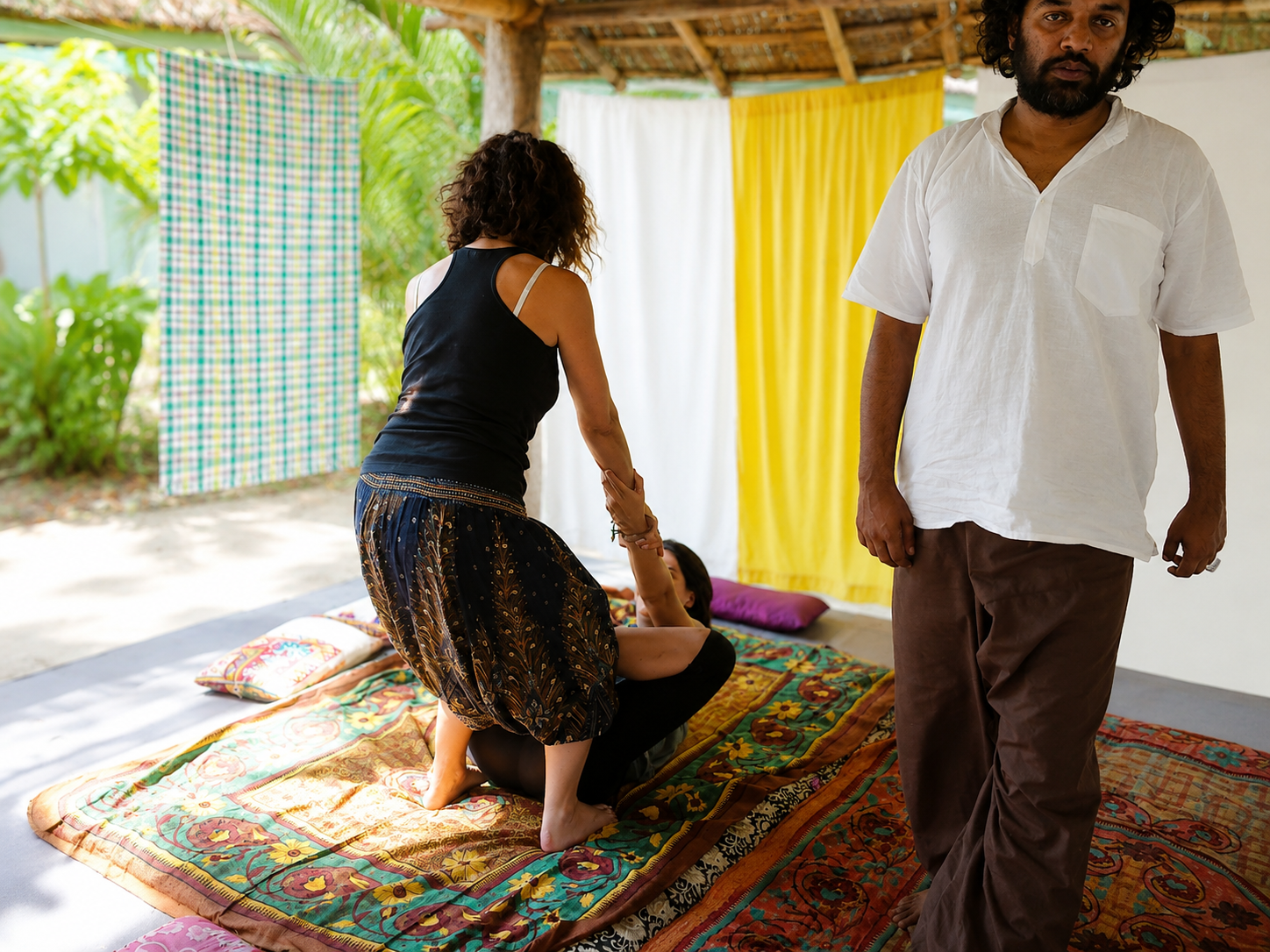
| Core approach | Active: You assess the client and prescribe modified asanas, breathing exercises, and lifestyle changes that the client must perform themselves over weeks or months. | Passive (Hands-On): The client lies completely relaxed on a floor mat (fully clothed) while the practitioner manually releases tight fascia, clears blocked Sen energy lines, and moves the client’s joints through therapeutic ranges of motion. |
| Client’s role | The client performs the prescribed asanas, breathing exercises, and lifestyle changes themselves over weeks or months. | The client lies completely relaxed on a floor mat (fully clothed) while the practitioner provides hands-on bodywork and assisted movement. |
| Main methods | Modified asanas, breathing exercises, and lifestyle changes. | Manual release of tight fascia, work along Sen energy lines, and movement through therapeutic ranges of motion. |
Why this matters in the real world:
When a client is in acute discomfort—suffering from sciatica, piriformis syndrome, or severe neck stiffness—they often lack the strength, body awareness, or motivation to do daily therapeutic asanas correctly on their own. With Thai Yoga Massage, they feel a dramatic release of pain and improved posture before they even walk out of their very first session.

2. Nadis vs. Sen Lines + Modern Clinical Anatomy
In Indian yogic texts, we talk about Prana flowing through 72,000 Nadis. In Thai Yoga Massage, this is distilled into 10 primary Sen Sib energy lines that run through the physical body.
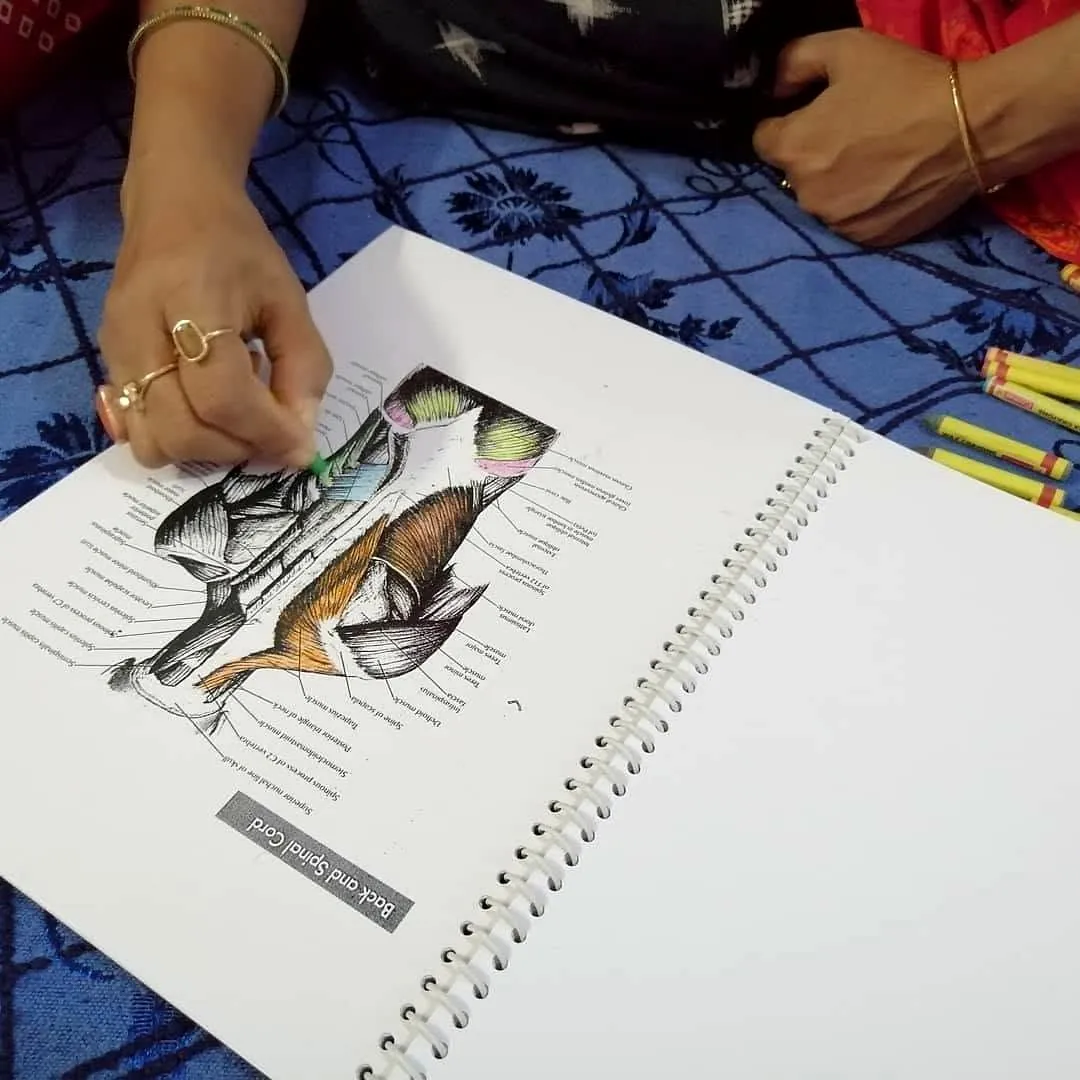
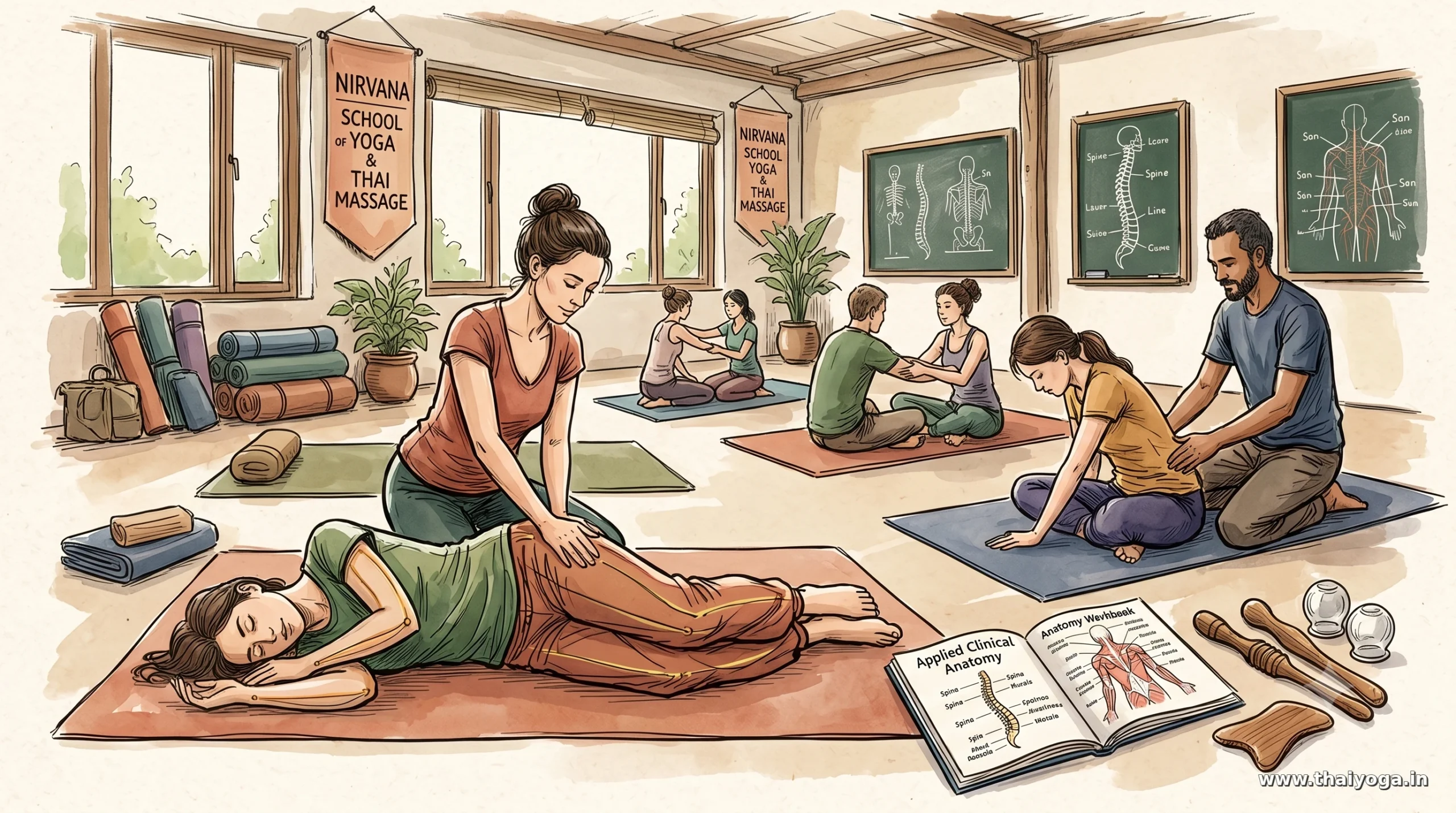
At Nirvana School, we don’t treat Sen lines as vague, invisible concepts. Through our Clinical Anatomy Curriculum, you learn how these 10 Sen lines map directly onto modern myofascial meridians, nerve pathways, and musculoskeletal structures.
- When you work on a Sen line along the leg, you know the exact hamstring attachment, sciatic nerve pathway, and hip joint capsule you are influencing.
- Instead of memorizing a blind sequence of moves, you learn clinical posture assessment—looking at a client’s pelvis, shoulders, and spine to customize the treatment on the spot.

3. Combining Both: The Ultimate “High-Ticket” Therapist Formula
The secret of India’s highest-paid wellness practitioners isn’t choosing between Yoga Therapy and Thai Massage—it is combining them.
Imagine offering a client this 3-step transformation:
- Assess & Release (Thai Massage + Tok Sen): Use 45 minutes of hands-on Sen line acupressure, Tok Sen wooden vibration tools, and cupping to unlock their frozen fascia and reset their joint alignment.
- Mobilize (Assisted Yoga Stretching): Guide their newly relaxed muscles into deep, safe passive yoga stretches to restore range of motion.
- Stabilize (Yoga Therapy Prescription): Give them just 2 simple corrective yoga postures to do at home for 5 minutes a day to lock in the results of your hands-on session.
No generic spa therapist can teach corrective yoga, and no standard yoga teacher can perform deep clinical myofascial release. When you master both, you have zero competition in your city.
Learn Clinical Bodywork Under Direct 1-on-1 Supervision
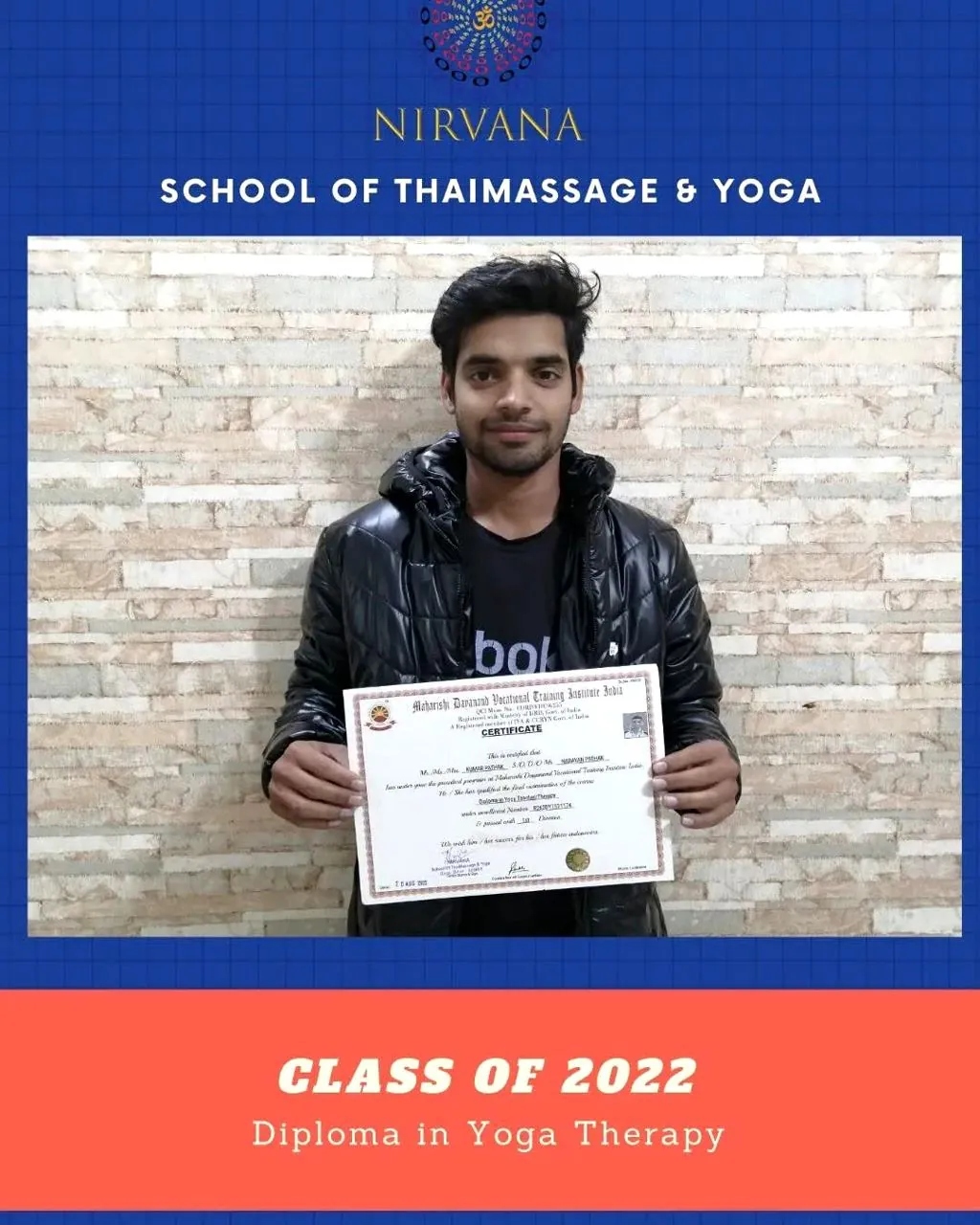
At Nirvana – School of Yoga and ThaiMassage (Gaya, Bihar), Founder Shyam Kishore Mishra has spent over 11 years training yoga teachers and beginners to master the bridge between clinical anatomy and traditional Thai healing.
- Small Batches Only: Capped at 12 students per workshop so your body mechanics and pressure are corrected daily.
- 4 Workshops a Year: Designed as intensive, practical immersions that fit into a working professional’s calendar.
- Lifetime Confidence: Includes 2 years of free re-training support so you never feel lost when treating complex client cases.
👉 Message Nirvana on WhatsApp for Our Next Workshop Dates or Claim Your ₹3,000 Early-Bird Voucher on thaiyoga.in today!